Scott Hahn with David Scott
In the readings since Christmas, Jesus has been revealed as the new royal son of David and Son of God. He is sent to lead a new exodus that brings Israel out of captivity to the nations and brings all the nations to God.
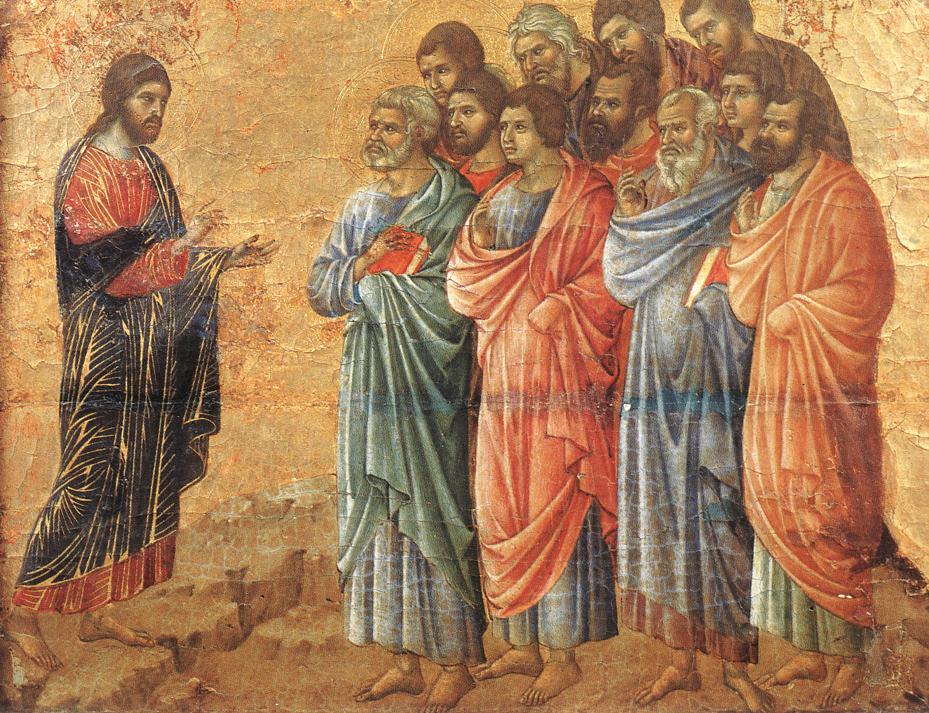
As Moses led Israel from Egypt through the sea to give them God’s law on Mount Sinai, Jesus too has passed through the waters in baptism. Now, in today’s Gospel, He goes to the mountain to proclaim a new law—the law of His Kingdom.
The Beatitudes mark the fulfillment of God’s covenant promise to Abraham—that through his descendants all the nations of the world would receive God’s blessings (see Genesis 12:3; 22:18).
Jesus is the son of Abraham (see Matthew 1:1). And through the wisdom He speaks today, He bestows the Father’s blessings upon “the poor in spirit.”
God has chosen to bless the weak and lowly, those foolish and despised in the eyes of the world, Paul says in today’s Epistle. The poor in spirit are those who know that nothing they do can merit God’s mercy and grace. These are the humble remnant in today’s First Reading—taught to seek refuge in the name of the Lord.
The Beatitudes reveal the divine path and purpose for our lives. All our striving should be for these virtues—to be poor in spirit; meek and clean of heart; merciful and makers of peace; seekers of the righteousness that comes from living by the law of Kingdom.
The path the Lord sets before us today is one of trials and persecution. But He promises comfort in our mourning and a great reward.
The Kingdom we have inherited is no earthly territory, but the promised land of heaven. It is Zion where the Lord reigns forever. And, as we sing in today’s Psalm, its blessings are for those whose hope is in the Lord.
Blessed Guerric of Igny (1080-1157)
Sermon for All Saints
“Blessed are the poor in spirit for theirs is the kingdom of heaven”. The beginning of the New Testament is altogether joyful and full of fresh grace. It even nudges the unbeliever and sluggish to pay heed and, more to the point, to act by promising happiness to the unfortunate and the Kingdom of heaven to those in exile, those in any kind of distress.
The beginning of the new Law is pleasant to hear and starts off under happy auspices since the Legislator follows on from this beginning by giving so many assurances of beatitude. In this way those who have been attracted by them will go from one virtue to the next, climbing the eight steps that this Gospel has set up and placed within our hearts…
For it is clear that what it is all about is the ascent of the heart and of the progress of merit through eight steps of virtue, leading men gradually from the lowest to the highest levels of evangelical perfection. In this way they will at last enter and see the God of gods in Zion (Ps 84[83], 8), in his Temple, of which the prophet has said: “It had a stairway of eight steps,” (Ez 40,37).
The first virtue of the beginner is to renounce the world, through which we become poor in spirit; the second is gentleness, by which we submit ourselves and become accustomed to obedience; then the grief with which we lament our sins or with weeping beg for the virtues.
These we certainly enjoy wherever we have the greatest hunger and thirst for justice, as much for ourselves as for others, and begin to be stirred by zeal against sinners. Yet, lest immoderate fervour turn into fault, the mercy by which it is tempered follows after.
Through putting this into practice and training ourselves, when we have learnt how to be just and how to be merciful, then we may, perhaps, be capable of entering into contemplation and giving ourselves to the purification of our hearts so as to see God.